
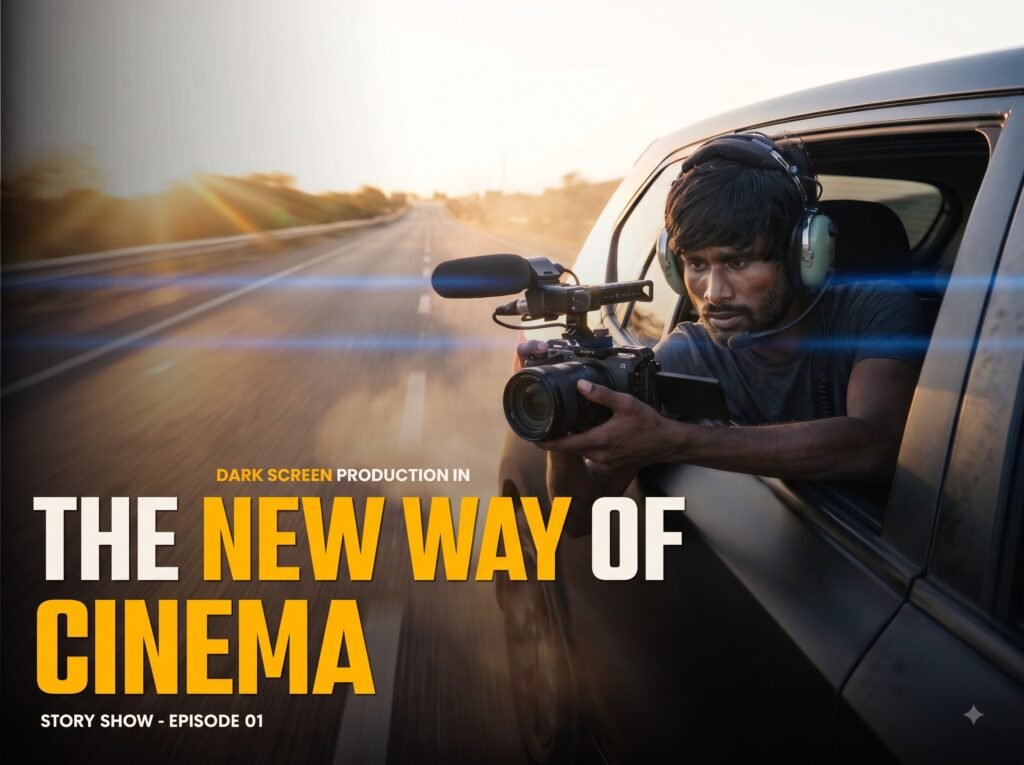
The traditional film industry has long operated on an expensive gatekeeping premise: to create cinematic imagery, one must possess massive production budgets, elaborate lighting trucks, and large crews. At Dark Screen Production, we believe the digital era demands a radical shift in perspective.
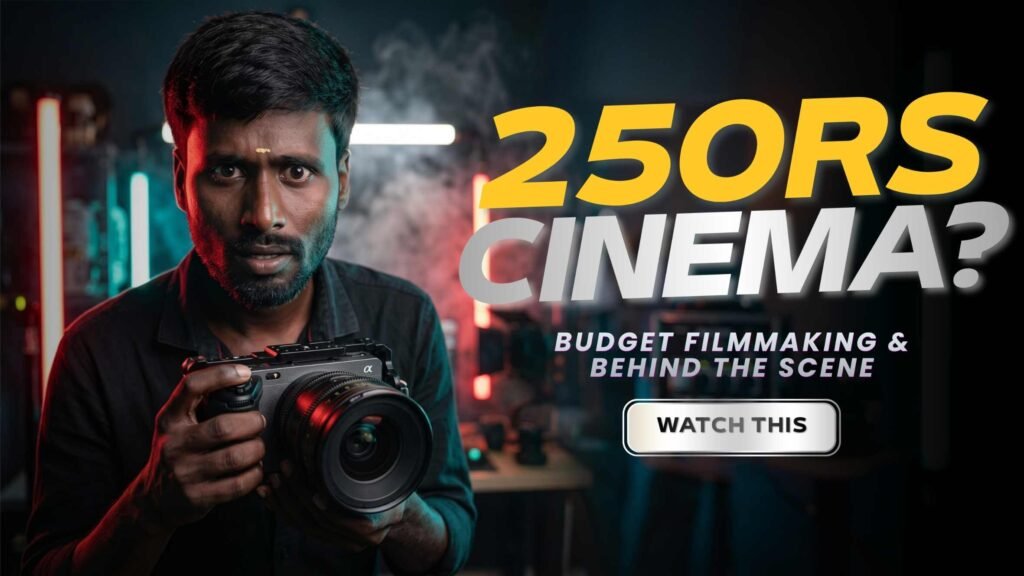
The Story Show was conceived to demystify visual storytelling, independent filmmaking, and practical production engineering. In our debut episode, we tackled a definitive challenge for indie creators: Is it possible to produce an emotionally compelling, high-production-value short film for a practical expense of just ₹250?
The Reality of Independent Filmmaking
Every year, thousands of passionate writers and directors arrive in Chennai aiming to make their mark in cinema. However, many find themselves caught in prolonged compromise loops, waiting indefinitely for producers or watering down scripts to match limited means.
Cinema is fundamentally not defined by overhead expenses or equipment rental receipts. Real cinematic impact stems from:
- Uncompromising script fidelity.
- Strategic control of available and practical light.
- Capturing genuine, raw emotional performance.
- Precision framing and lensing.
The ₹250 Budget Architecture
Creating high-impact visuals on a ₹250 budget requires replacing monetary expenditure with deliberate planning and discipline.
| Production Element | Traditional Approach | Our ₹250 Strategy |
| Location | Paid studio/commercial sets | Untapped practical outdoor landscapes & controlled interior corners |
| Lighting | Multi-light HMI & large skypanel setups | Available golden-hour ambient light paired with minimalist RGB tube accents |
| Crew Footprint | 10–20 technicians on set | Lean run-and-gun setup handled directly by core creators |
| Gear Selection | Heavy cinema packages | Compact Sony FX30 cine rig paired with an 85mm cine prime lens |
Technical Breakdown: Visualizing Emotion
1. The Sony FX30 & 85mm Cine Prime Setup
To capture the raw pain of our love-failure narrative, we relied on the Sony FX30 matched with a fast 85mm prime lens. This combination isolated the actor from distracting background elements, creating a shallow depth of field with rich organic bokeh, natural facial falloff, and cinematic compression.
2. Low-Key, Mood-Driven Lighting
Rather than over-lighting scenes with flat, high-key setups, we prioritized low-key contrast. Deep shadow transitions and subtle rim lights helped externalize the protagonist’s internal grief directly onto the frame.
3. Narrative Direction Over Aesthetic Clutter
A cinematic look falls flat without compelling narrative intent. We focused heavily on blocking, actor micro-expressions, and authentic emotional pacing so that every cut serves the script rather than acting as empty visual flair.
The Core Philosophy of the Story Show
“Cinema isn’t merely the act of projecting moving images; it is the craft of making an audience experience the emotional truth behind every single frame.”
The Story Show bridges technical execution and narrative theory. We analyze not just the technical settings of a camera or light fixture, but the philosophical choices that drive an indie director’s visual language.
Watch the Full Episode
Explore the step-by-step making, shot-by-shot visual comparisons, and full expense accounting in our detailed video breakdown.
- 🎬 Watch Episode 01: [https://youtu.be/1IA3mA3DLQY]
- 🏢 Production Studio: Dark Screen Production
- 📩 Collaboration & Inquiries: info@darkscreenproductions.com | +91 8667016100